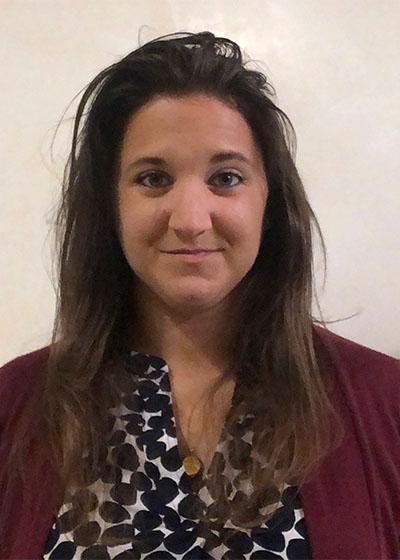

Anastasia Piliouras
My research utilizes physical experiments, modeling, field work, and remote sensing to better understand (1) the morphodynamics of fluvial, deltaic, and coastal systems; and (2) interactions between vegetation, hydrology, climate, and surface processes. Understanding these complex interactions is essential for predicting landscape change, especially in a changing climate, and requires investigation across a broad range of temporal and spatial scales using a mixture of observational and modeling techniques. The goal is to understand not only how landscapes evolve but also how the processes and process interactions that shape landscapes change under different conditions. Given the rapid warming in the Arctic, much of my work is focused on high latitude landscapes, but I'm interested in morphodynamics, ecogeomorphology, hydrologic connectivity, and coastal change at all latitudes.
Curriculum Vitae: https://tinyurl.com/2xt2dk8y