Employment of geoscientists is projected to grow 5 percent from 2022 to 2032, faster than the average for all occupations. About 2,200 openings for geoscientists are projected each year, on average, over the decade. Many of those openings are expected to result from the need to replace workers who transfer to different occupations or exit the labor force, such as to retire. See the Occupational Outlook Handbook for more details.
Career Growth
The need for energy, environmental protection, and responsible land and resource management is expected to spur demand for geoscientists. Our degree programs prepare students to pursue a broad range of careers, including:
- Energy- exploration and production of energy and mineral resources
- Environmental geoscience- investigation, monitoring, remediation of a wide range of environmental problems, many of which are related to ground water hydrology
- Government- investigation and monitoring of water and geologic resources and geologic hazards in the service of state and federal agencies; also includes matters of science and policy
- Education- from middle school to college level
- Environmental Law- law firms and federal agencies (e.g., EPA) involved in enforcing, interpreting, and complying with environmental laws
Where geoscientists find jobs
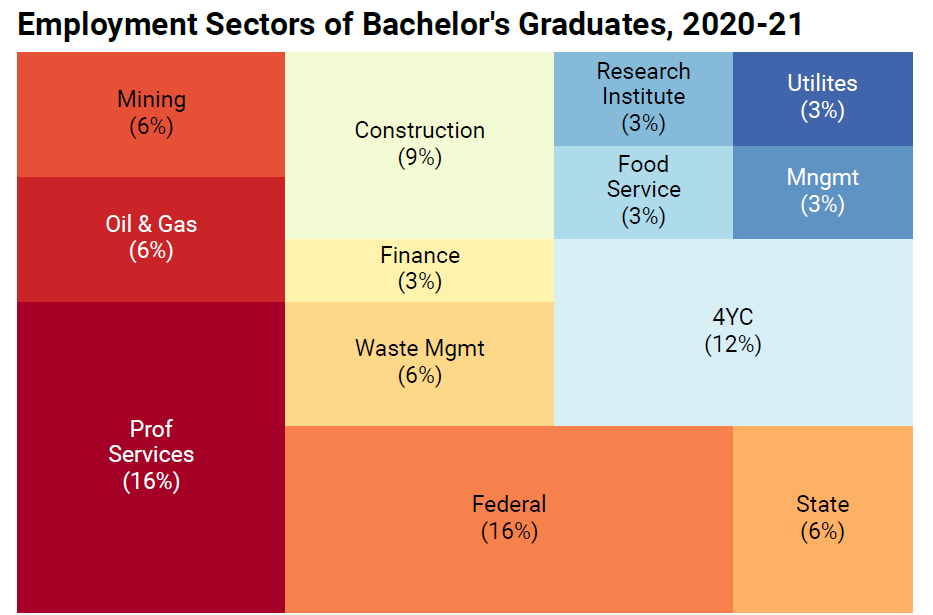
Bachelor’s graduates employed at graduation found jobs across a wide spectrum of industries. See illustration below of 2020-21 graduates from the Status of Recent Geoscience Graduates published by the American Geosciences organization.
Salaries
| Employment Sector | Annual Mean Wage (2023) |
|---|---|
| Mining, quarrying, and oil and gas extraction | $126,140 |
| Federal Government | $110,400 |
| State Government | $82,370 |
| Management, Scientific, and Technical Consulting Services | $78,610 |
Data from US Dept. of Labor
The job market for geoscientists is considered to be very good; for more information, please visit the Bureau of Labor Statistics Occupational Outlook Handbook
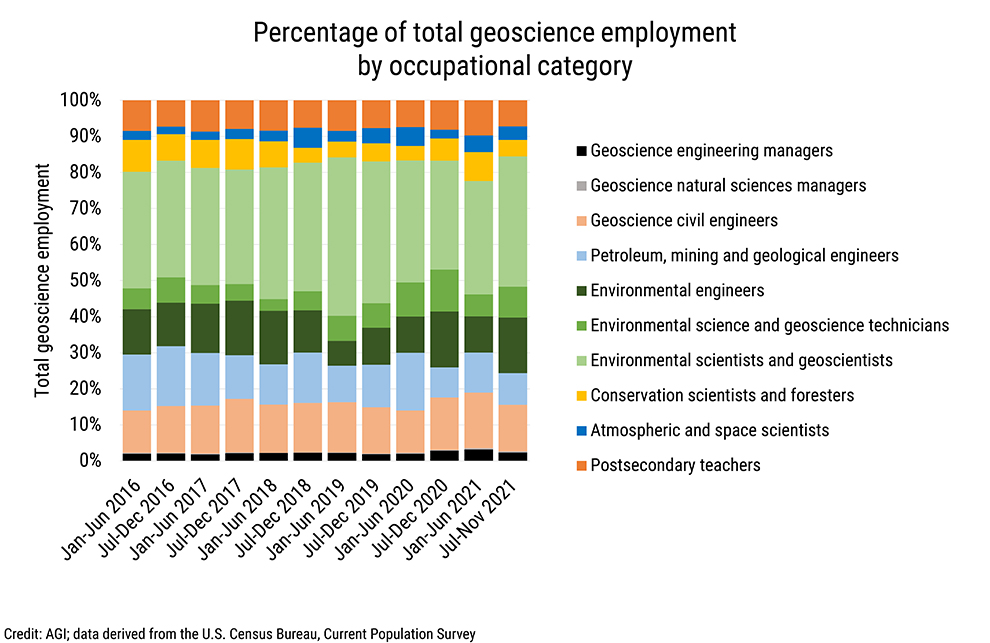
Employment by categories