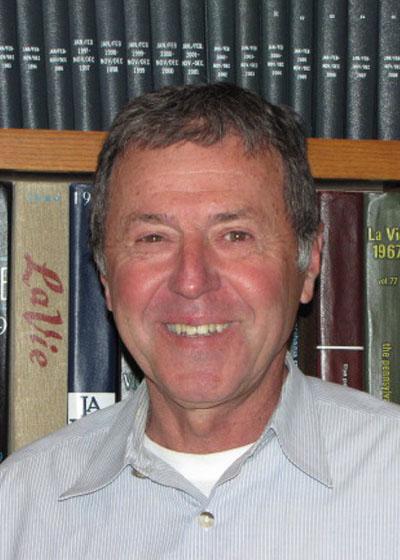
Mark Patzkowsky, professor of geosciences in Penn State's College of Earth and Mineral Sciences, has been elected a 2019 fellow of the Geological Society of America.
Mark Patzkowsky, professor of geosciences in Penn State's College of Earth and Mineral Sciences, has been elected a 2019 fellow of the Geological Society of America.

For the first time, the Penn State College of Earth and Mineral Sciences has Millennium Scholars in all class levels -- from graduating seniors to first-year students.

Penn State sophomore Angelina "Angie" Santamaria, who plans on double majoring in Earth sciences and policy and women's studies, said the Millennium Scholars program put her on a path toward success that she once thought was unattainable.
Underground fiber-optic cables, like those that connect the world through phone and internet service, hold untapped potential for monitoring severe weather, according to scientists at Penn State.
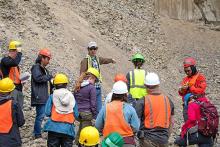
Geosciences field camp is a rite of passage for Penn State geosciences students. This past summer, 36 students made the trek out West to investigate the geology of the intermontane western United States.
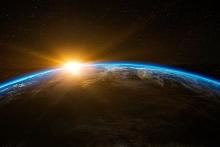
The spring 2020 EarthTalks series, "Societal Problems, EESI Science towards Solutions," features scientists from Penn State's Earth and Environmental Systems Institute (EESI) and explores the human impacts on the global environment and how to apply this knowledge to decision-making.
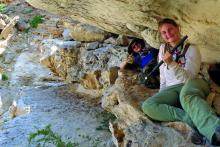
High on the craggy cliffs of Oman's rocky desert landscape, Sarah Ivory squeezed into narrow, dark caves in search of a different kind of goldmine.
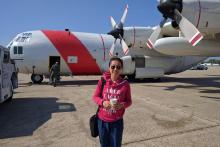
Penn State researchers found that a common tool used to understand carbon dioxide fluxes, or how the gas moves between the atmosphere and ecosystems, may be overconfident because of uncertainties in the release of carbon dioxide by the combustion of fossil fuels.