James Kasting
Title
Emeritus - Atherton Professor
For more info: https://sarahivorypollen.wordpress.com/
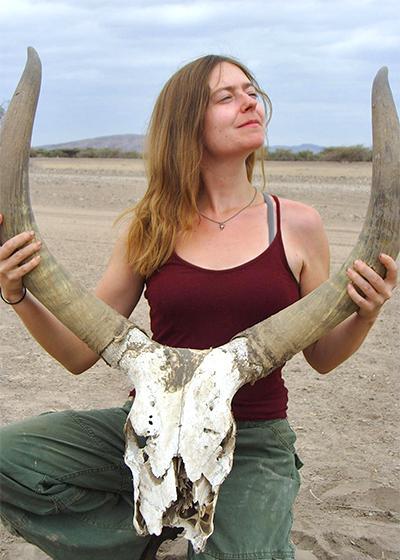
I am an ecologist and geologist who uses fossil pollen records to better understand past ecosystem change in order to inform future conservation strategies. I also work with models and remote sensing data to observe the processes that drive tropical ecological change and vegetation responses to climate in the past. This work focuses on vegetation and climate history from the recent past to millions of years ago in order to evaluate future range changes and land-use impacts in hotspots of global biodiversity.
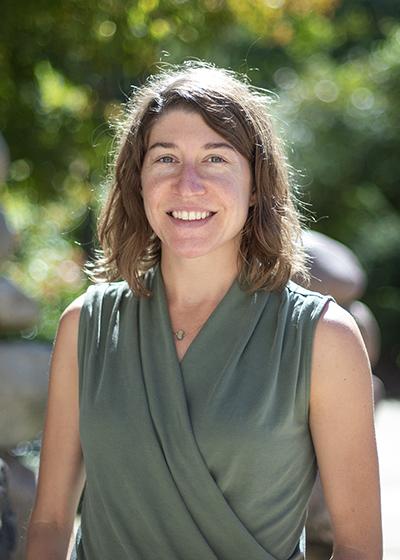
I combine field geology, petrography, and stable isotope geochemistry to improve the use of chemical sediments in tectonic and paleoenvironmental reconstructions. I am particularly interested in how terrestrial environments, like those in which humans live, responded to globally warm periods in Earth history to better understand how our habitats will adapt (or not) to future warming. To understand the feedbacks of tectonic uplift, weathering, and marine and atmospheric carbon, I measure carbon, oxygen, and clumped isotopes in carbonate rocks to reconstruct uplift of high-altitude terranes and alkalinity of ancient oceans. In addition, I am interested in reconstructing the phosphate levels of Precambrian environments to better understand the how phosphate accumulated for prebiotic phosphorylation and the role phosphate played in biological processes on early Earth.
Current projects:
Ingalls, M., Blättler, C., Higgins, J., Magyar, J.S., Eiler, J., and Fischer, W.W. (2020) P/Ca in carbonates as a proxy for alkalinity and phosphate levels, Geophysical Research Letters, doi: 10.1029/2020GL088804.
Smith, B.P., Ingalls, M., Trower, E.J., Lingappa, U.F., Present, T.M., Magyar, J.S., and Fischer, W.W. (2020) Physical and chemical controls on flat-pebble deposits: an analog from the Great Salt Lake, Utah, Sedimentology, doi: 10.1029/2020JF005733.
Ingalls, M., Rowley, D.B., Currie, B.S., and Colman, A.S., (2020) Reconsidering the uplift history and peneplanation of the northern Lhasa terrane, Tibet, American Journal of Science, 320: 479-532, doi:
10.2475/06.2020.01.
Ingalls, M., Frantz, C.M., Snell, K.E., and Trower, E.J., (2020) Carbonate facies-specific stable isotope data record climate, hydrology, and microbial communities in Great Salt Lake, UT, Geobiology, 18: 566-
593, doi: 10.1111/gbi.12386.
Ingalls, M. (2019) Reconstructing carbonate alteration histories in orogenic sedimentary basins: Xigaze forearc, southern Tibet, Geochimica et Cosmochimica Acta, 251: 284-300,
doi:10.1016/j.gca.2019.02.005.
Ingalls, M., Rowley, D.B., Currie, B.S., Olack, G., Li, S., Tremblay, M., Schmidt, J., Shuster, D., Zeitler, P., Lin, D., and Colman, A.S., (2017) Paleocene to Pliocene low-latitude high elevation of southern Tibet:
Implications for tectonic models of India-Asia collision, Cenozoic climate, and geochemical weathering, GSA Bulletin, doi:10.1130/B31723.1.
Ingalls, M., Rowley, D.B., Currie, B.S., and Colman, A., (2016) Large-scale subduction of continental crust implied by India-Asia mass-balance calculation, Nature Geoscience, doi:10.1038/ngeo2806.
I am a sedimentary geochemist who works in modern and ancient environments to understand how chemical sediments archive Earth history information.
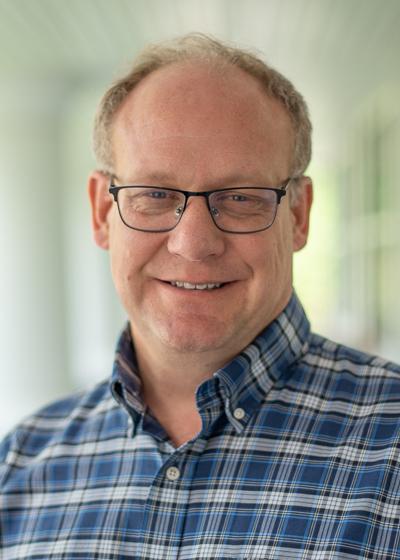
Dr. Christopher H. House (Ph.D. 1999, UCLA Earth and Space Sciences) is a Professor Geosciences in the Department of Geosciences, Huck Institute for Life Sciences, and Earth and Environment Systems Institute. Having published over 100 peer-reviewed manuscripts, Dr. House studies the origin and early evolution of microbial life on Earth, as well as the possibility and search for habitable environments beyond the Earth. This work has included origin of life chemistry, molecular and genomic tree of life building, biosignature geochemistry, and planetary science. He is currently the Director for the Pennsylvania Space Grant and co-director for the Penn State Consortium for Planetary and Exoplanetary Science and Technology.

Peter Heaney's research has focused on the mechanisms of crystal growth, dissolution, and cation exchange reactions in soil minerals using synchrotron X-ray scattering techniques. In addition, he has explored the causes of unusual optical effects in gem materials, particularly iridescence and chatoyancy.
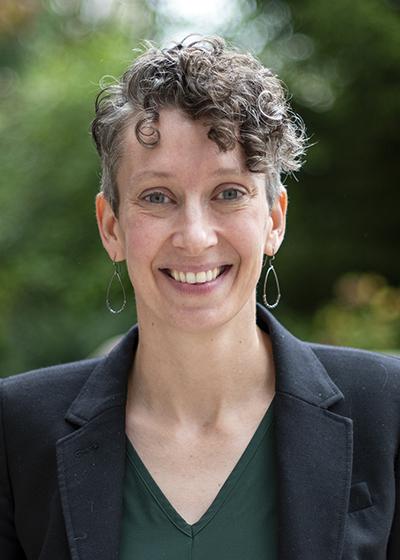
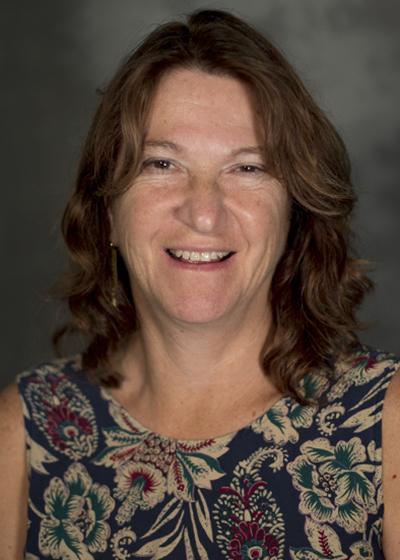
My research is motivated by fundamental questions of whole Earth evolution. A key geodynamic question is how large-scale mass transfer occurs between deep and shallow regions of the mantle. This question is important because the phenomena of mantle plume activity, continental rifting and plate convergence are intimately linked to the thermo-chemical structure of the deep Earth. Related questions are the extent to which the mantle preserves geochemically discrete reservoirs, and how chemical heterogeneities from the mantle are manifest in the compositions of mafic lavas. Research in East Africa, Turkey and Saudi Arabia explores the geochemical consequences of large- and small-scale lithospheric delamination associated with slab rollback and/or breakoff and lithospheric drip magmatism. Research throughout the East African Rift System evaluates models of continental break-up and the initiation of oceanic rift segmentation using structural and geochemical evidence. My work also includes study of the dynamics of volcanism and lithospheric modification in subduction environments. These volcanoes have the capacity for explosive activity that could prove fatal to millions of people, so characterizing magmatic processes and eruptive behavior is critical. My approach to these questions combines field work, geochemical analysis and microanalysis of mineral textures and compositions to determine thermal, chemical and physical properties of eruptive systems. My ultimate goal is to develop a robust model of lithospheric behavior that compares and contrasts the geochemical effects of disturbance in extensional and compressional tectonic environments.
Current research projects include:
I am a high-temperature geochemist and petrologist who uses major and trace element abundance data and radiogenic isotopic signatures (Sr-Nd-Pb-Hf-He-Os) of volcanic rocks to study the evolution of the asthenosphere and lithosphere over geologic time. Most of my work centers on the development of volcanic and plutonic bodies that form in extensional and plume-related environments in the East African Rift, Iceland and the circum-Mediterranean (Turkey, Saudi Arabia). I earned my Ph.D. from the Massachusetts Institute of Technology after completing a BSE in civil engineering from Princeton University and a Fulbright to the University of Iceland. Prior to coming to Penn State, I was an assistant professor in the Department of Environmental Sciences at the University of Virginia and was the founding director of the UVa Branch of the Virginia Museum of Natural History.