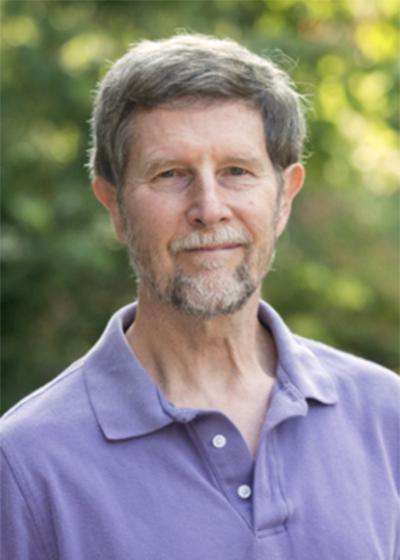
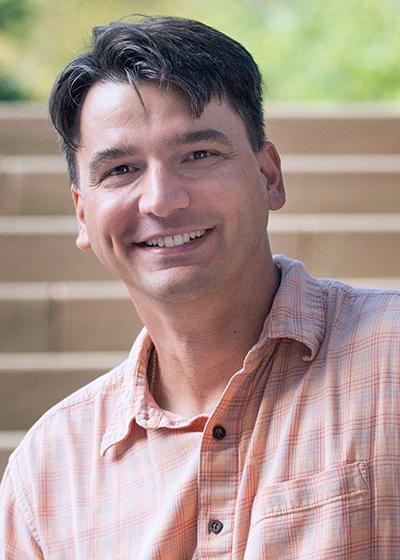
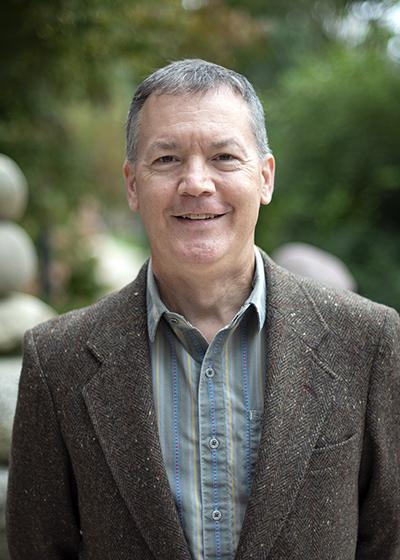
I identify as an igneous and metamorphic petrologist, and an isotope geochemist. Most of my research relates to mass transfer and processing in subduction zones. I am interested in all aspects of subduction - from sediment ingestion into the trench, to the metamorphic reactions (especially dehydration reactions) that take place in the downgoing slab, to mantle metasomatism and melting, to the magmatic and volcanic processes taking place at all depths in the arc crust. Beyond subduction-related processes, I am also interested in large mafic igneous provinces including Iceland and the Bushveld / Rustenburg Layered Suite. Recently, I have been dabbling in critical element resources in Pennsylvania including lithium, cobalt, and rare earth elements.
Current Research / Funded Projects:
E-FIRE (ExTerra Field Institutes and Research Endeavor) Partnership for International Research and Education. The E-FIRE project, now nearing completion, funded 11 PhD students and postdoctoral scholars at US institutions to conduct field work in the Western Alps and Voltri Massif (France and Italy) in collaboration with European partners. The scientific themes of this project included fluid transfer, reaction timescales, and rheological properties of materials at the slab interface and mantle regions of a fossil subduction zone.
I identify as an igneous and metamorphic petrologist, and an isotope geochemist. Most of my research relates to mass transfer and processing in subduction zones. I am interested in all aspects of subduction - from sediment ingestion into the trench, to the metamorphic reactions (especially dehydration reactions) that take place in the downgoing slab, to mantle metasomatism and melting, to the magmatic and volcanic processes taking place at all depths in the arc crust. Beyond subduction-related processes, I am also interested in large mafic igneous provinces including Iceland and the Bushveld / Rustenburg Layered Suite. Recently, I have been dabbling in critical element resources in Pennsylvania including lithium, cobalt, and rare earth elements.
Values:
In my group, we believe that science is for everyone. I strive to create an inclusive and welcoming environment, and expect the same of my students and collaborators. I encourage students to think independently and creatively, which sometimes means making mistakes. I challenge myself and my students to grow by stepping outside of our relative comfort zones.


I study sedimentary rocks and volcanic deposits to learn about continental rifting process, and the timing and geologic setting of early human evolution. Broadly, my current and ongoing research can be split into three themes: the geologic context for early human evolution; extensional faulting and basin development; and magmatic evolution of explosive volcanism in rift zones. This work is focused in eastern Africa and it is highly collaborative. I working closely with paleontologists and archaeologists among others.
Over the course of my academic career, I have been involved in several outreach programs for K-12 and higher education students that promote STEM disciplines (science, technology, engineering and mathematics). See my personal webpage for more information.
I am currently the PSU Undergraduate Research Programs Director for the NASA/Pennsylvania Space Grant Consortium (PSGC) at Penn State University. I direct the PSGC Research Internship Program called WISER|MURE|FURP which places first-year undergraduate students with faculty mentors in STEM fields at Penn State for a year-long (2 semester) research internship.
I develop and teach educator workshops for Pennsylvania K-12 teachers. One workshop focused on the geology and paleontology of the Bighorn Basin in Wyoming and Montana (workshop held in Montana) and another on explosive volcanic deposits hosted at Penn State.
Our EGG group is dedicated to improving the physical imaging of near-surface geology structure and its physical properties using quantitative geophysical methods (seismic and ground-penetrating radar).
Current projects include:
I am a geophysicist who pushes the resolution limit of geophysics data including seismic and GPR for studying near surface geology associated with environmental and energy problems (e.g. near surface geology, geohazards, and CO2 sequestration). I am leading a research group Environmental Geophysics Group (EGG) at Penn State Geosciences.
Fossil plants tell the story of our green planet’s evolution and reveal its landscapes from deep time to present. They are also extremely sensitive indicators of past climates, plant-insect interactions, biodiversity, and the effects of significant environmental disturbances. These data provide deep-time analogs that uniquely illuminate modern ecosystems and their possible responses to anthropogenic change. My temporal focus is the latest Cretaceous through middle Eocene, ~67-45 million years ago (Ma), an interval characterized by global disturbances that are closely spaced in geologic time. These include latest Cretaceous warming and cooling (68-66 Ma), the end-Cretaceous mass extinction (66 Ma), ensuing recovery during the Paleocene (66-56 Ma), and both abrupt and long-term warming across the Paleocene-Eocene boundary (56 Ma). I enjoy collaborations with numerous colleagues worldwide and a terrific lab group, with whom I do extensive fieldwork, concentrated currently in Patagonia, Argentina, and increasingly in SE Asia. Here are highlights of two current projects, and more are listed here.
Origins of Southeast Asian Rainforests from Paleobotany and Machine Learning
This cutting-edge NSF project is underway in collaboration with Dr. Thomas Serre’s machine-learning lab at Brown, Dr. Maria Gandolfo’s paleobotany lab at Cornell, and numerous collaborators at MEF in Argentina and in several more countries including China, India, Australia, Vietnam, Indonesia, and Brunei. We aim to develop the powerful tools of machine learning to identify fossil leaves and shed a powerful new light on the evolution of SE Asia’s extremely biodiverse and threatened rainforests. We are making and using extensive fossil collections from SE Asia and diverse areas that have contributed to the flora through plate movements over geologic time.
Patagonia Paleofloras Project
The fossil record of life on land predominantly comes from the Northern Hemisphere. However, the outstandingly rich, relatively little-known fossil beds of Patagonia, southern Argentina, provide an unrivaled opportunity to learn whether life responded differently to mass extinction, plate tectonics, and past climate change on the other side of the world. This multinational NSF project intensively samples and analyzes fossil plants and animals from Patagonia through about 20 million years, from just before the end-Cretaceous dinosaur extinction (66 million years ago), through the early recovery period and the Eocene warming interval. Through groundbreaking field discoveries, comprehensive collections, and state-of-the-art lab techniques, this research is transforming understanding of the origins of the Southern Hemisphere’s floras and biomes, the role of Patagonia, and the legacy of surviving living fossils now located in vulnerable rainforest areas as far away as Southeast Asia (see above). A Google Scholar page lists our >135 publications.
Dr. Peter Wilf is a paleobotanist investigating ancient ecosystems, past environmental change, biogeography, and the evolution, extinction, and paleoconservation of plants and terrestrial ecosystems. His research emphasizes questions relevant to modern climate change, biodiversity, and biogeography. Fieldwork locations over three decades include Argentina, Vietnam, Indonesia, Pakistan, Chile, Brunei, Western USA, and Pennsylvania. Dr. Wilf’s recognitions include Fellow of the American Association for the Advancement of Science, the Paleontological Society, and the Geological Society of America; David and Lucile Packard Fellow; the George W. Atherton Award for Excellence in Teaching from Penn State; and the Paul F. Robertson Breakthrough of the Year Award and the Wilson Award for Excellence in Research from the Penn State College of Earth & Mineral Sciences.
Summary of major research topic: Assembly and Paleoconservation of Southeast Asia’s Endangered Rainforests. The endangered, hyperdiverse tropical rainforests of Southeast Asia have assembled from multiple sources, reflecting the region's dynamic geology. Illuminating the little-known paleobotanical history of the region’s vegetation requires comprehensive sampling efforts at diverse, far-flung locations. Our two-decade project on Cretaceous–Eocene floras of Argentine Patagonia has revealed ranges in West Gondwana more than 50 million years ago for numerous iconic, high-biomass SE Asian trees, such as kauris, gums, and Asian chinkapins. In SE Asia itself, we recently discovered the first fossil-leaf floras from Brunei (northern Borneo), representing the first study of Cenozoic compression floras in the Malay Archipelago for more than 100 years. The fossils showed that the current dominant and imperiled regional trees, the giant dipterocarps, already dominated Borneo four million years ago. These discoveries inform conservation efforts and frame the high-risk biogeography of the remaining rainforests in Southeast Asia. In Australia, we recently demonstrated the direct use of fossil evidence to inform protection of living tropical rainforests.
I am interested in broad aspects of igneous petrology, the earliest history of our planet, ore deposit formation mechanisms, and new ways the geosciences are relevant to society. Below are examples of research directions that I am currently pursuing.
The main thrust of my research has been, and will continue to be using petrology, isotope geochemistry, and new mass spectrometry techniques to answer fundamental questions about when and how the continental crust formed. I am also developing a research program on crustal distillation, including critical ore deposits globally.
Ultimately, I am interested in developing projects and collaborations in the areas listed below as well as any other areas. If you have questions, comments, or other ideas please get in touch!
Originally from the great state of Michigan, I am currently an Associate Professor at The Pennsylvania State University. Before starting at Penn State, I obtained my PhD from the University of Alberta and spent several years as a postdoc at the Carnegie Institution for Science in the Department of Terrestrial Magnetism.