


Katherine Freeman
Title
Evan Pugh University Professor
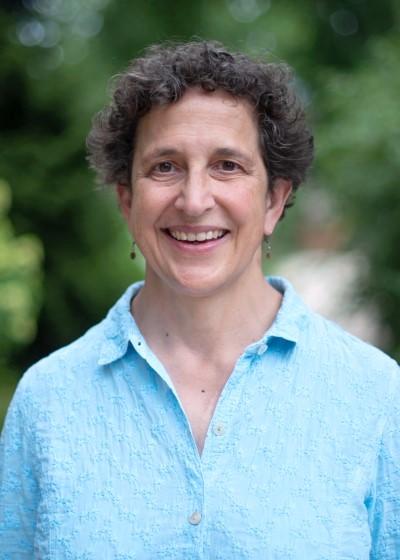

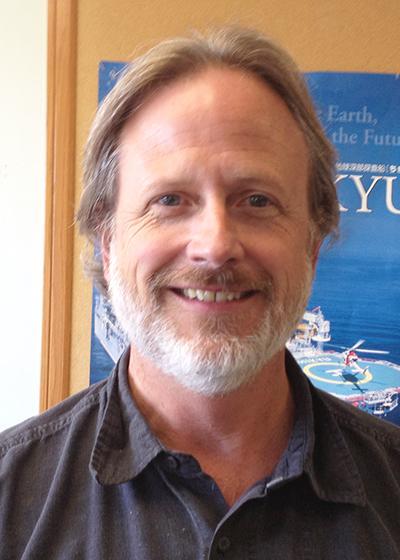
I am a structural geologist who uses field and microstructural observations to study processes occurring along active convergent plate boundaries. This work, mostly funded by the National Science Foundation, has taken my students and I to subduction zones around the world including Sumatra, Costa Rica/Panama, Alaska, Japan, Taiwan, and New Zealand. My work is multidisciplinary and has led to collaborations at Penn State that address a range of problems related to subduction such as the mass balance and active uplift rates in the forearc, the impacts of seamounts and ridges on subduction, the significance of fracture patterns and veining, and the causes for systematic cleavage patterns in collisional mountain-belts. Most recently, I have been conducting studies in Japan and Kodiak, Alaska on rocks that were deformed along the subduction interface at depths of seismogenesis to understand the processes that lead to different slip behaviors including Great Earthquakes. I also have a project with Roman DiBiase studying the impact of mountain-building processes in the active collision in Taiwan on the patterns of rock strength and how these patterns influence surface processes.

Susquehanna Shale Hills Critical Zone Observatory Publications:
See current list of publications on Google Scholar.
My research focuses on quantifying the mechanisms of erosion and sediment transport responsible for shaping Earth’s surface and applying this insight to problems ranging from post-wildfire erosion to landscape evolution. I am motivated by the challenge to develop surface process models that satisfy both modern observations and longer-term geologic constraints. Such a mechanistic approach is necessary to better predict landscape response to changing climate and land use conditions, mitigate natural hazards, and understand the dynamic interactions between surface and deep Earth processes. We investigate these problems using fieldwork, topographic and photogrammetric analysis, cosmogenic radionuclides, and modeling.
My research focuses on natural and human-induced reactions among water, rock, gas, biota, and soil. I have long been interested in the rates and mechanisms of water-rock reactions in the field and in the laboratory, including how we measure them, reproduce them in the laboratory, and model them.
Research Interests and Current research projects include:
As an aqueous geochemist at Penn State, my title is Atherton Professor and Evan Pugh University Professor Emerita of Geosciences. I investigate chemical, geological, biological, physical, and anthropogenic processes associated with the circulation of aqueous fluids in shallow hydrogeologic settings, with a particular focus on inter-relationships within the critical zone. I have a Ph.D. in geological and geophysical sciences from Princeton University.
The research group I am a part of (the Penn State Ice and Climate Exploration---PSICE---http://www.psice.psu.edu) is involved in a number of projects ranging from satellite remote sensing and geophysics to modeling to laboratory measurements of ice properties
I am a glaciologist and geophysicist who is interested in the response of the ice sheets of Antarctica and Greenland to climate change. Making progress in this field depends on a better understanding of subglacial geological and geophysical conditions. The distribution of sedimentary basins, crustal heat flow, bed-forms and -roughness, and hydrology are all poorly understood subglacial parameters of the great Polar ice sheets, which can have significant societal impacts through sea level change.
My background is in Geophysics, Glaciology, and Electrical Engineering. I’m happy to welcome new students. Both undergraduates who want to take my classes, do a senior thesis, a project, and graduate students who wish to pursue a Master’s or Ph.D. in glaciology.
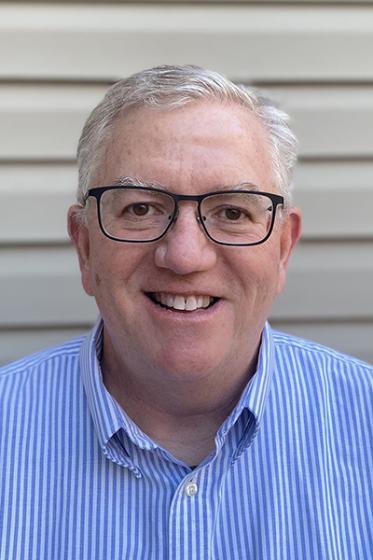
Charles J. Ammon earned a B.S. in Physics from Penn State, an M.A. in Geology (Concentration in Geophysics) from SUNY Binghamton, and a Ph.D. in Geophysics from Penn State. He specializes in earthquake seismology and among other topics, has developed methods used in seismic imaging of the lithosphere, large- and giant-earthquake rupture processes, and approaches to locating earthquakes along remote mid-ocean ridges. He has been a member of the geoscience faculty since 2001, and Associate Head for Undergraduate Programs since July, 2022. He teaches courses on earthquake science to students spanning the spectrum from non-science majors to advanced geophysics graduate students. He has served two terms on the Board of Directors of the Incorporated Institute of Seismology (IRIS, now part of the EarthScope Consortium), served as chair of the IRIS Global Seismographic Network Standing Committee, and serves on a seismic-monitoring advisory committee for the US Air Force. He is a Fellow of the American Geophysical Union.